Scoring to Picture: Workflow in Modern DAWs
Learn the essential workflow for scoring music to picture using modern DAWs, from timecode sync and tempo mapping to track organization and delivery. Essential for film composers and music producers.
When you feel a movie’s heartbeat—when the tension builds slowly, then snaps into a rapid chase, or when a quiet moment lingers just long enough to hurt—that’s tempo mapping, the deliberate control of timing and pacing across a film’s scenes to guide emotional response. Also known as cinematic rhythm, it’s not about how fast the cuts happen, but how the silence, movement, and sound work together to make you breathe differently. Think of it like music: a film doesn’t need a soundtrack to have tempo. The way a character walks into a room, how long the camera holds on their face, when the music swells or drops out—those are all tempo decisions.
Tempo mapping isn’t just an editing trick. It’s shaped by the script, the director’s vision, the cinematographer’s framing, and the sound designer’s layering. A slow tempo can make a scene feel heavy, meditative, or dread-filled—like the long takes in The Power of the Dog where every pause adds weight. A fast tempo can create panic or joy—think of the editing in Mad Max: Fury Road, where every cut is a punch. But tempo isn’t just speed. It’s variation. A scene might start slow, then accelerate, then freeze for a single frame. That’s where the real power lies: in the contrast. Directors and editors use tempo mapping to control what the audience feels, not just what they see.
Tempo mapping relates directly to film pacing, the overall speed and flow of a narrative across its runtime. It also ties into editing tempo, the rhythm of cuts and transitions, and movie timing, how moments land in relation to dialogue, music, and action. You can’t fix a bad story with fast cuts, but you can ruin a great one by misjudging when to hold and when to move. That’s why the best editors don’t just count frames—they listen to the silence between them.
What you’ll find in this collection are real breakdowns of how tempo mapping works behind the scenes. From how a single pause in a performance can shift a scene’s entire tone, to how virtual production tools now let directors adjust pacing in real time on set, these posts show you the mechanics behind the feeling. You’ll see how intimacy coordinators time emotional beats, how composers sync music to editing rhythms, and why some films feel rushed while others feel timeless—not because of budget, but because of how time was handled.
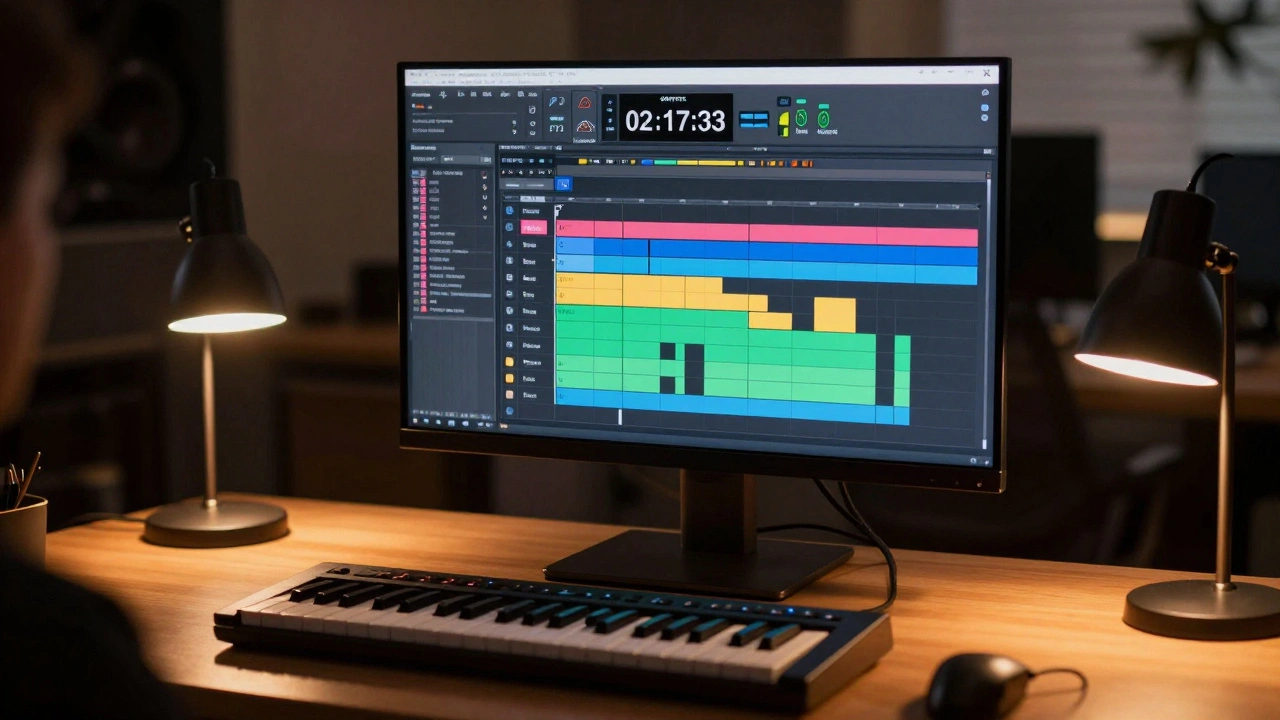
Learn the essential workflow for scoring music to picture using modern DAWs, from timecode sync and tempo mapping to track organization and delivery. Essential for film composers and music producers.