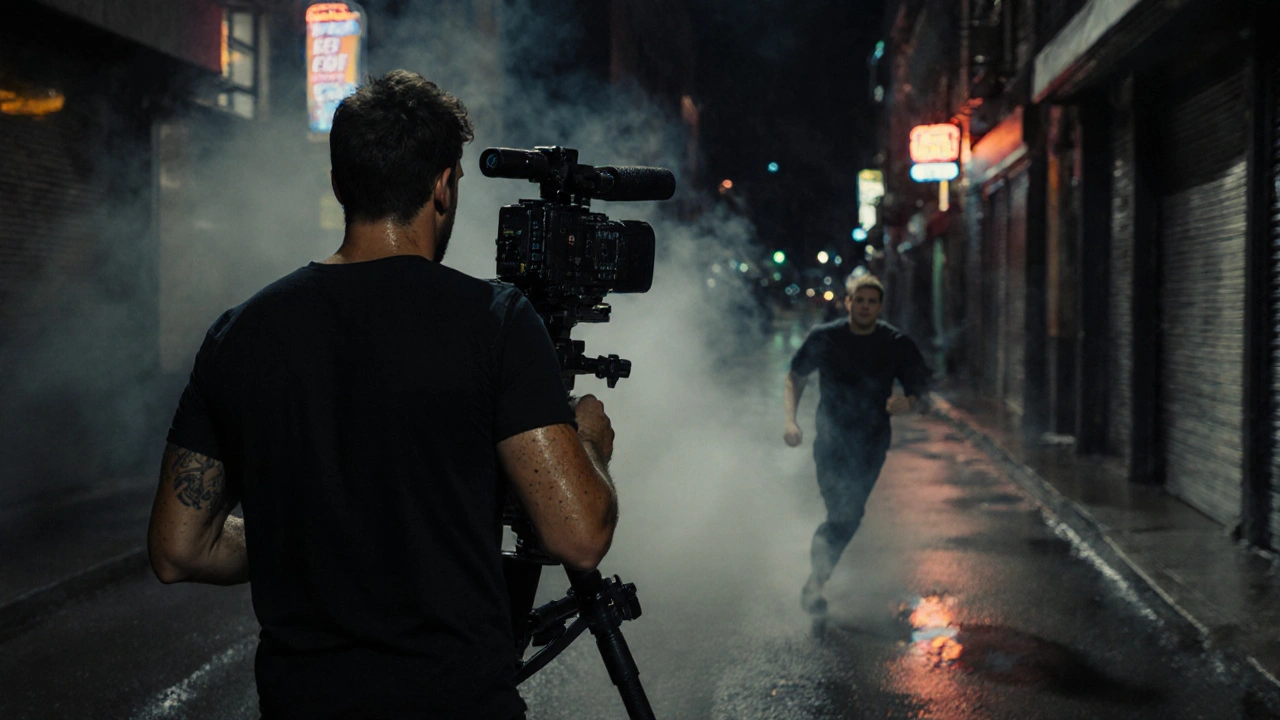
Stunts Filming: How Real Danger Makes Movies Come Alive
When you see a car flip mid-air or a hero leap from a skyscraper, what you're watching isn't CGI—it's stunts filming, the live-action performance of dangerous or physically demanding actions in film production, often performed by trained specialists. Also known as practical stunts, it's the raw, unfiltered heart of action cinema—no render farms, no green screens, just human bodies pushing limits.
Behind every great stunt is a stunt performer, a highly trained professional who executes dangerous actions safely and convincingly for film. These aren’t actors doubling for leads—they’re specialists with backgrounds in martial arts, skydiving, motorsports, or gymnastics. They rehearse for weeks, wear custom padding, and rely on rigging, airbags, and precise timing. And they’re not just there for spectacle; their work defines the tone of entire films. Think of Tom Cruise hanging off the side of a plane in Mission: Impossible—that wasn’t a model. That was a human being, strapped in, doing it for real. The same goes for the falls in John Wick, the motorcycle jumps in Mad Max: Fury Road, or the rooftop chases in The Dark Knight. All of it was built on practical effects, physical, in-camera techniques that create visual illusions without digital manipulation. Studios still choose practical stunts because audiences feel them. You don’t just see the crash—you feel the impact in your chest.
But stunts filming isn’t just about guts. It’s a tightly controlled operation. Every move is planned by a film safety, the system of protocols, equipment, and personnel dedicated to minimizing risk during physical action sequences in filmmaking team. They calculate fall heights, test landing surfaces, and run multiple rehearsals. Insurance companies demand it. Unions enforce it. And still, accidents happen—because real danger can’t be fully eliminated. That’s why the best stunt teams treat every shot like it’s the first time. They don’t rely on luck. They rely on discipline, repetition, and trust.
What you’ll find in this collection aren’t just stories about explosions and car chases. These are deep dives into how stunts are planned, who does them, how they’re paid, and why they still matter in a world full of digital effects. You’ll read about stunt performers who worked for decades without credit, crews who rigged impossible falls on tiny budgets, and directors who refused to use CGI because they knew the audience would know the difference. This isn’t about fantasy. It’s about real people doing real things—and making you believe they’re invincible.