Scoring to Picture: Workflow in Modern DAWs
Learn the essential workflow for scoring music to picture using modern DAWs, from timecode sync and tempo mapping to track organization and delivery. Essential for film composers and music producers.
When you hear a swell of strings just as the hero turns around, or a single piano note after a door slams—that’s scoring to picture, the precise process of composing and syncing music to match the timing, emotion, and movement of film visuals. It’s not just writing a nice melody—it’s making the music breathe with the film. Without it, even the most powerful scenes can feel flat. Think of it like dubbing sound to lips: if the timing’s off, the whole thing breaks. And in film, that break is felt in your chest, not just your ears.
Film scoring, the broader craft of creating original music for movies, relies on this tight connection. Composers don’t just write themes—they count frames. A jump scare needs a silence, then a sting. A chase scene demands accelerating rhythms that match the cut rate. Even the smallest gesture—a glance, a breath, a tear—can be underscored by a single instrument held just long enough to make you feel it. That’s the magic of cinematic music, music designed not to stand alone, but to serve the story on screen. It’s why you remember the music from Jaws before you remember the shark. It’s why a quiet scene in The Power of the Dog feels heavier because of the absence of strings, not their presence.
Behind every great score is a team working frame by frame. A film composer sits with the editor, watching the rough cut over and over, marking moments where music should swell, fade, or vanish. They use click tracks, temp scores, and sometimes even metronomes to lock timing before recording a single note. The film composer, the artist who translates visual emotion into sound doesn’t just write music—they become a silent storyteller. Their tools aren’t just orchestras or synths—they’re stopwatches, timelines, and emotional intuition.
What you’ll find here are real breakdowns of how this process works—how composers turn a 30-second scene into a 90-second emotional arc, how they use leitmotifs to track characters across films, and why some scores feel invisible even though they’re doing all the work. You’ll see how music isn’t added to a film—it’s woven into it. And you’ll understand why the best film scores don’t just accompany the picture—they complete it.
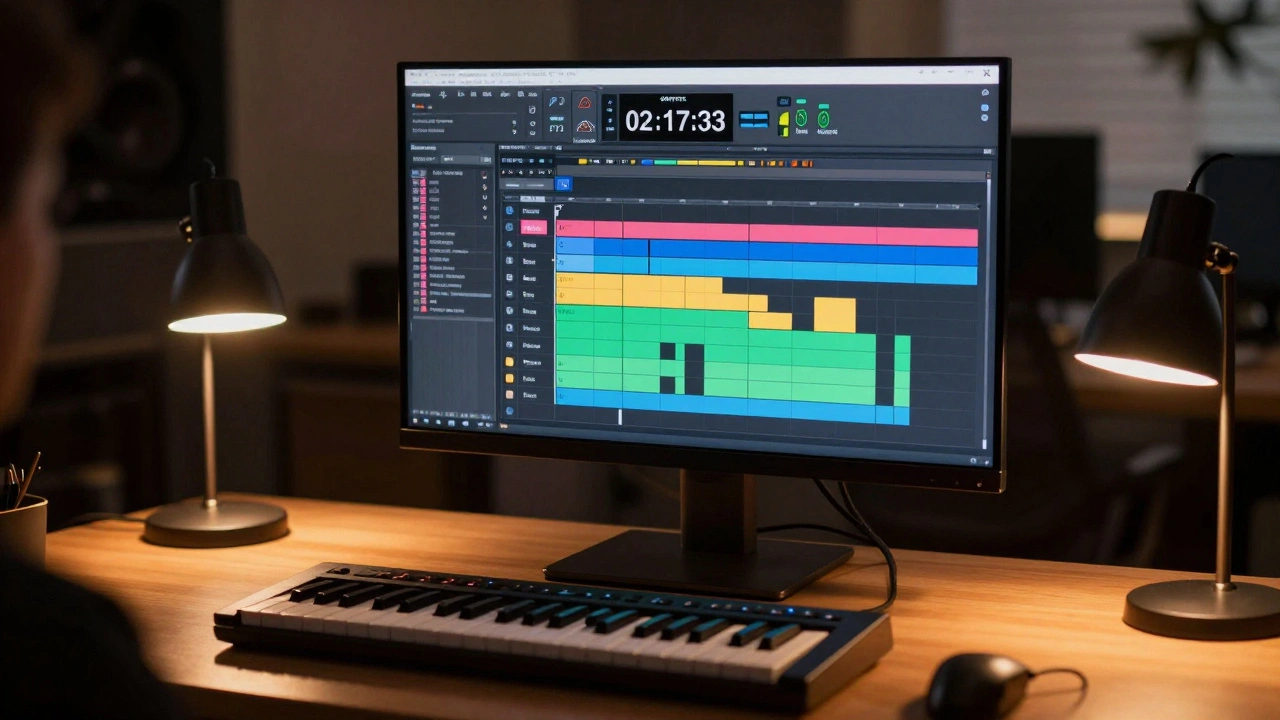
Learn the essential workflow for scoring music to picture using modern DAWs, from timecode sync and tempo mapping to track organization and delivery. Essential for film composers and music producers.