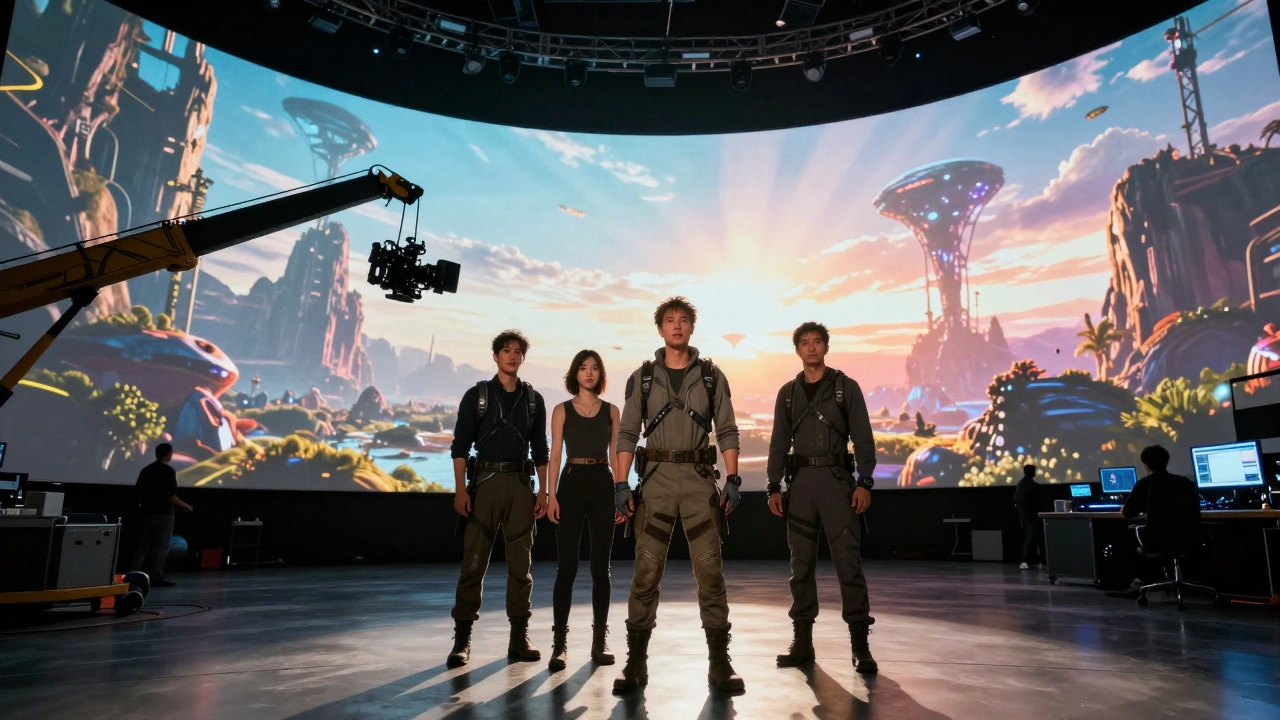
Real-Time VFX: How Live Visual Effects Are Changing Film Production
When you hear real-time VFX, visual effects rendered and displayed instantly during filming, not after. Also known as live VFX, it lets directors and cinematographers see digital elements—like dragons, alien cities, or explosions—on set as if they’re really there. This isn’t science fiction anymore. It’s happening on sets right now, from indie films to big-budget blockbusters, using tools like Unreal Engine and LED volume stages.
Real-time VFX doesn’t just save time—it changes how stories are told. Instead of green screens and guesswork, actors perform in environments that respond to their movements. Lighting matches the digital world because it’s generated by the same system driving the visuals. That’s why you see more realistic performances now: actors aren’t acting at a tennis ball—they’re reacting to a glowing alien spaceship that’s physically lit and moving around them. This tech also cuts post-production costs by up to 40%, according to production teams who’ve switched from traditional VFX pipelines. It’s not just about looks; it’s about control. Directors can tweak a digital storm in real time, adjust camera angles on the fly, and know exactly what the final shot will look like before wrapping the day.
Real-time VFX connects directly to other key areas in modern filmmaking. virtual production, a workflow that combines real-time rendering with physical sets and camera tracking is the backbone of this shift. It’s what made The Mandalorian look so seamless and is now being used in horror films, sci-fi thrillers, and even commercials. CGI in film, digital imagery used to create or enhance scenes still plays a role—but now it’s built into the shoot, not added later. And it’s not just for big studios. Smaller crews are using affordable game engines and off-the-shelf hardware to create real-time environments on tight budgets. This isn’t a luxury anymore; it’s becoming a standard tool for filmmakers who want speed, accuracy, and creative freedom.
What you’ll find in the posts below aren’t just theory or hype. These are real case studies—how teams used real-time VFX to finish films under budget, how lighting teams adapted to LED walls, and why some directors now refuse to shoot without it. You’ll see how this tech intersects with camera movement, set design, and even actor performance. There’s no fluff here—just how it works, what it costs, and who’s using it to make better movies today.