Prelighting Strategies: Efficient Film Lighting Setups for Smoother Shoots
Prelighting strategies help cinematographers set up efficient, intentional lighting before the shoot begins-saving time, reducing stress, and improving visual quality on set.
When you think about how a film looks, you probably imagine the camera, the actors, or the final color grade. But long before the camera rolls, there’s a quiet, critical step called prelighting, the process of setting up and testing lighting on a film set before principal photography begins. Also known as pre-light, it’s the moment when the gaffer and key grip turn an empty set into something that feels alive under the lens. Without prelighting, even the best-designed sets can look flat, unnatural, or inconsistently lit when filmed.
Prelighting isn’t just about plugging in lights. It’s a collaboration between the director of photography, production designer, and lighting crew to test how light interacts with materials—wood, metal, fabric, paint—before the actors arrive. It’s how they figure out if a wall will glare under a softbox, or if a practical lamp in the scene casts the right shadow on an actor’s face. This step directly affects cinematography, the art and technique of motion-picture photography, because it determines what the camera can capture. It also ties into production design, the creation of the visual world of a film, including sets, props, and lighting environments. A set that looks perfect in daylight might fall apart under tungsten or LED, and prelighting catches that before it’s too late.
Think of it like tuning a guitar before a concert. You don’t wait until the show to find out the strings are out of tune. On a film set, prelighting prevents wasted time, reshoots, and costly delays. It’s especially vital on low-budget films, where there’s no room for trial and error. It also helps with set lighting, the placement and control of lights to achieve the desired visual tone and mood that matches the story’s emotional tone—whether it’s the cold blue of a hospital corridor or the warm amber of a 1970s living room.
What you’ll find in this collection are real examples of how prelighting shapes scenes you’ve seen on screen. You’ll read about how lighting choices affect texture in production design, how crews solve lighting problems on tight schedules, and why some films look more real than others—not because of the camera, but because someone spent hours in an empty room with a dimmer switch and a clipboard. These aren’t theory pieces. They’re field reports from sets where lighting didn’t just happen—it was planned, tested, and perfected before the first take.
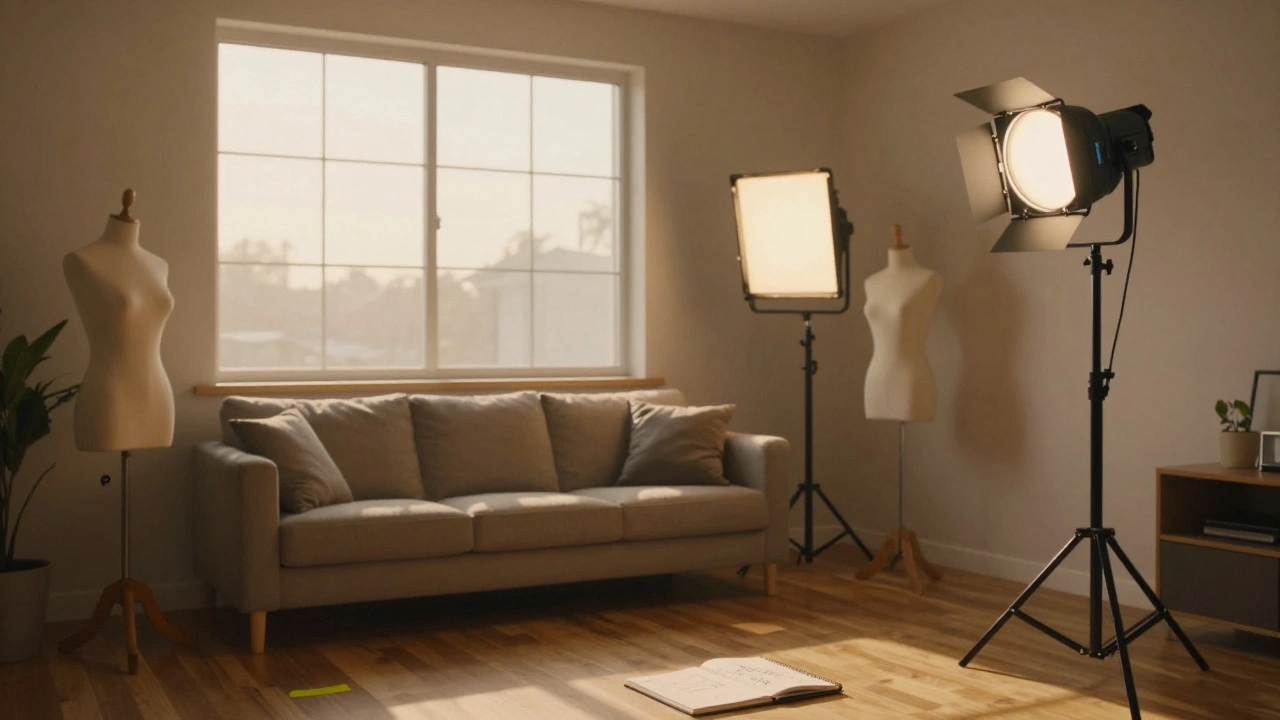
Prelighting strategies help cinematographers set up efficient, intentional lighting before the shoot begins-saving time, reducing stress, and improving visual quality on set.