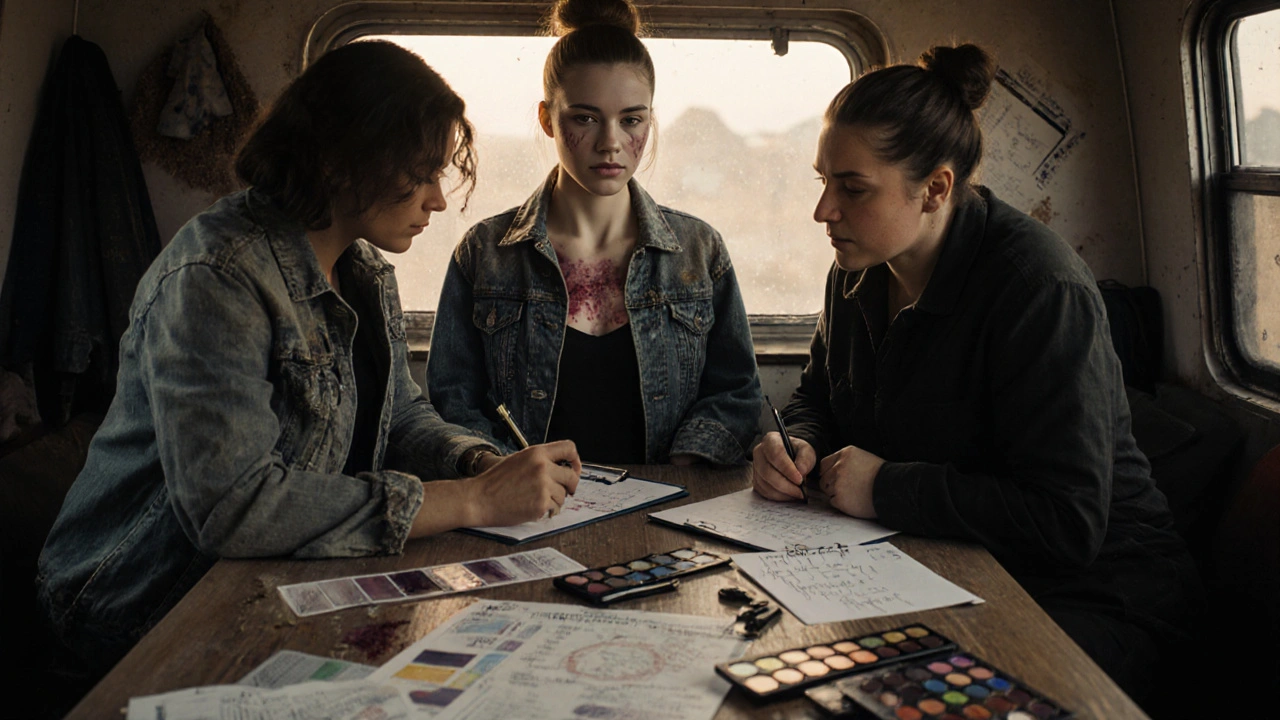
Movie Makeup Team: How Craftsmen Bring Characters to Life
When you see a character on screen who looks like they stepped out of another world—or another decade—it’s not magic. It’s the work of a movie makeup team, a specialized group of artists and technicians who design, apply, and maintain facial and body makeup to transform actors into fictional beings. Also known as film makeup artists, this team doesn’t just add color—they build identities. Their tools aren’t brushes and palettes alone; they’re silicone molds, latex appliances, airbrush rigs, and hours of precision work under hot lights. Every wrinkle, scar, alien ridge, or century-old age line is a decision made by someone who studied anatomy, chemistry, and storytelling.
A prosthetic makeup, the use of molded pieces like noses, ears, or entire facial structures attached to an actor’s skin to alter their appearance. Also known as appliances, these are custom-cast from silicone or foam latex, often taking weeks to design and fit is just one part of the job. The special effects makeup, a category that includes wounds, burns, creatures, and other non-realistic transformations using physical materials rather than digital effects. Also known as practical effects makeup, it’s the kind you can touch on set team works side-by-side with costume designers, hair stylists, and even lighting crews to make sure the makeup doesn’t break under camera glare or motion blur. A single zombie might need three different makeup applications: fresh, decaying, and blood-soaked—each requiring a different drying time and touch-up schedule. And if the actor is sweating, crying, or fighting? The makeup has to hold.
Behind every iconic look—from the aging of Robert De Niro in Raging Bull to the alien faces in Avatar—there’s a team that didn’t just follow a sketch. They solved problems: How do you make a creature’s skin look wet under infrared lighting? How do you keep a 12-hour makeup application from cracking when the actor laughs? How do you make a 70-year-old face look real when the actor is 25? These aren’t just artistic choices. They’re engineering puzzles solved with glue, paint, and patience.
The best movie makeup teams don’t just make people look different—they make you forget the actor was ever there. That’s the goal. And when you walk out of the theater, stunned by a character’s face, you’re not just watching a film. You’re seeing the result of hundreds of hours spent in a quiet room, with a magnifying lamp, a steady hand, and a whole lot of dedication.
Below, you’ll find real-world breakdowns of how these teams operate, what goes into their craft, and the films that changed the game. No fluff. Just the facts, the tricks, and the stories behind the skin.