Lighting for Action: How Film Sets Use Light to Drive Motion and Mood
When you watch a car chase through rain-slicked streets or a fistfight in a dimly lit warehouse, the lighting for action, the deliberate use of light to enhance movement, emotion, and spatial clarity in fast-paced film scenes. Also known as dynamic lighting, it doesn’t just show what’s happening—it tells you how to feel about it. This isn’t about turning on a bunch of lamps. It’s about using shadows, contrast, color, and movement to make the audience lean in—or hold their breath.
Good cinematic lighting, the art of shaping light to support narrative and emotional tone in film for action scenes often starts with what’s left out. Dark corners aren’t accidents—they’re tools. A flickering fluorescent in a warehouse chase isn’t just set dressing; it creates rhythm. A sudden burst of headlights in a nighttime pursuit isn’t just realism—it’s a punch. You see this in films like Mad Max: Fury Road, where the sun isn’t just a source—it’s a weapon, bleaching out the world to make every dust cloud and explosion feel brutal and immediate. Or in The Bourne Identity, where handheld cameras and low-key lighting turn a hallway fight into a heartbeat.
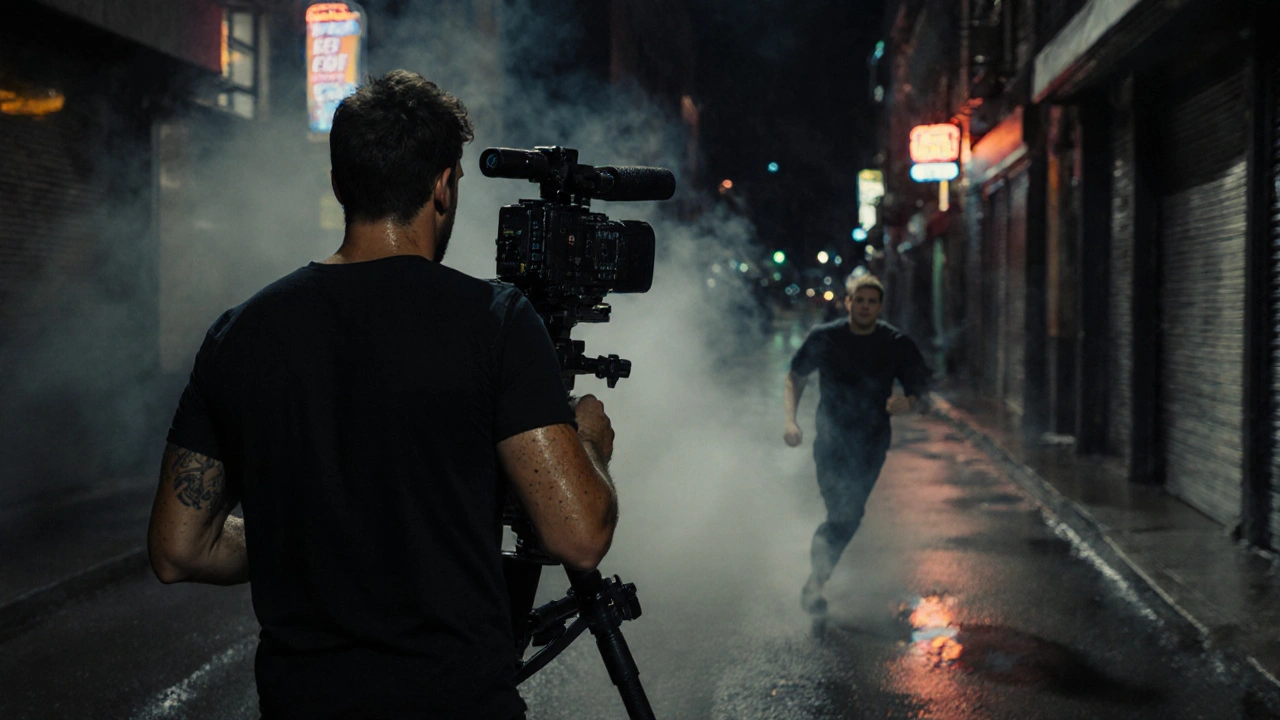
action scene lighting, the specific lighting techniques designed to support high-energy sequences in film demands speed, precision, and adaptability. Gaffers don’t have time for slow setups. They use practical lights—on cars, in windows, on weapons—to keep things real and responsive. LED panels let crews change color and intensity on the fly. Smoke machines aren’t just for atmosphere—they turn beams of light into visible paths that guide the eye through chaos. And when you’re shooting at 120 frames per second? The light has to be stable, consistent, and powerful enough to freeze motion without blowing out highlights.
It’s not just about the gear. It’s about collaboration. The director of photography works with the stunt coordinator to know where the actor will land, where the explosion will flash, and how long the camera will hold on the moment. Lighting for action is choreographed like the fight itself. One wrong angle, one overexposed frame, and the whole sequence loses its grip.
You’ll find this in the posts below—how crews light a rooftop chase with nothing but car headlights and a few handheld LEDs, how a single practical lamp became the emotional core of a fight scene, and why some directors refuse to use fill light even when actors are in shadow. These aren’t theoretical ideas. They’re real choices made under pressure, on sets with tight budgets and even tighter schedules. Whether it’s a silent moment before a punch lands or a car flipping through a tunnel of fire, lighting for action is what turns movement into meaning.