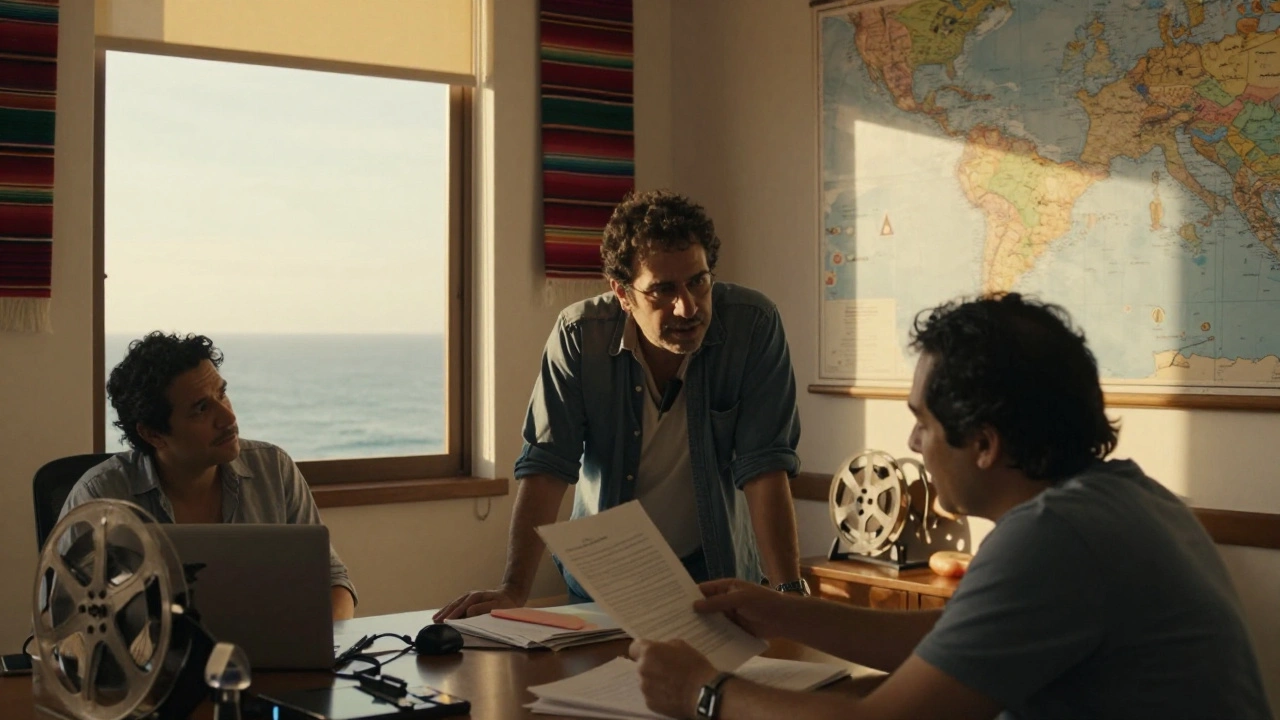
Latin America Europe Film: Co-Productions, Funding, and Cross-Border Storytelling
When you think of Latin America Europe film, co-productions between Latin American and European filmmakers that combine cultural storytelling with shared funding and distribution networks. Also known as transnational cinema, it's not just about language or location—it’s about pooling resources, talent, and audiences across continents to make films that neither side could afford alone. These aren’t niche experiments. They’re growing fast, driven by government incentives, streaming demand, and audiences hungry for fresh voices.
Take international co-productions, film projects funded and produced by companies from two or more countries, often to qualify for tax rebates and access broader markets. Also known as cross-border film partnerships, they’re the engine behind many of today’s most talked-about indie films. A Mexican director teams up with a Spanish producer to shoot in Colombia using a French camera crew, funded by a German grant and sold to a streaming service in Brazil. That’s not fantasy—it’s standard now. Why? Because film financing, the systems and strategies used to raise money for films before or during production, often involving pre-sales, grants, and tax credits works better when you spread the risk. Countries like Spain, France, and Argentina offer cash rebates for local spending, making it cheaper to shoot there than in Hollywood. And when you combine that with cross-border talent, actors, crew, and creatives hired from different countries to bring authenticity and global appeal to a film, you get stories that feel real and resonate everywhere.
This isn’t just about money. It’s about perspective. A film made in Chile with Swedish funding doesn’t just look different—it thinks differently. It challenges the usual Hollywood formula. You’ll find these films in festivals like San Sebastián, Guadalajara, and Rotterdam, where audiences aren’t looking for blockbusters—they’re looking for truth. And that truth often comes from the messy, beautiful overlap between cultures. The posts below show how these partnerships actually work: how directors secure funding before shooting, how actors from Lima end up in Berlin productions, and how governments use tax breaks to turn small towns into film hubs. You’ll see how a single scene can be shot in three countries, funded by three different sources, and still feel like one story. That’s the power of Latin America Europe film—and why it’s changing what cinema can be.