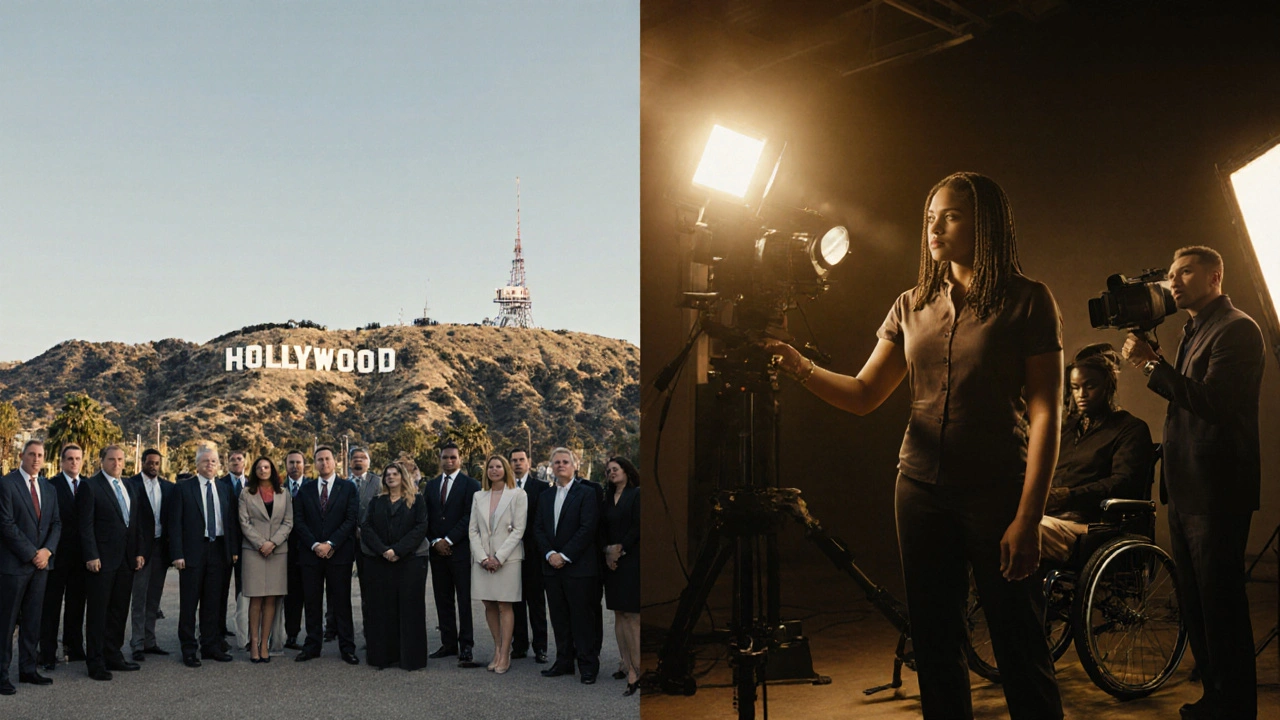
Inclusion Metrics: How Film Industry Diversity Is Measured and Improved
When we talk about inclusion metrics, quantifiable standards used to track representation in film production, from casting to crew hiring. Also known as diversity benchmarks, it’s no longer enough to say a film is inclusive—you have to prove it with numbers. Studios and streaming platforms now use these metrics to answer simple but powerful questions: Who’s in front of the camera? Who’s behind it? And does the crew reflect the world we live in?
These metrics don’t just count faces—they track roles. A film might have a diverse lead actor, but if the director of photography, production designer, and key department heads are all from the same background, the story still lacks depth. That’s why inclusion metrics now measure casting equity, the fair distribution of speaking roles across gender, race, disability, and LGBTQ+ identities, and industry accountability, the transparency of hiring data reported by studios to third-party organizations like the Annenberg Inclusion Initiative. You can’t fix what you don’t measure, and for years, the industry didn’t measure anything at all.
It’s not just about optics. Data shows films with diverse leadership and casting perform better at the box office and stream longer on platforms. But progress isn’t automatic. It happens when studios tie bonuses to inclusion goals, when unions require diversity reports for union jobs, and when independent filmmakers demand transparency from funders. The posts below show how this plays out in real projects—from indie films that used inclusion metrics to secure funding, to studio blockbusters that changed their casting process after public backlash. You’ll see how a single data point—a percentage of women in the camera department—can shift a whole production. These aren’t abstract ideals. They’re tools being used right now to rebuild a broken system.