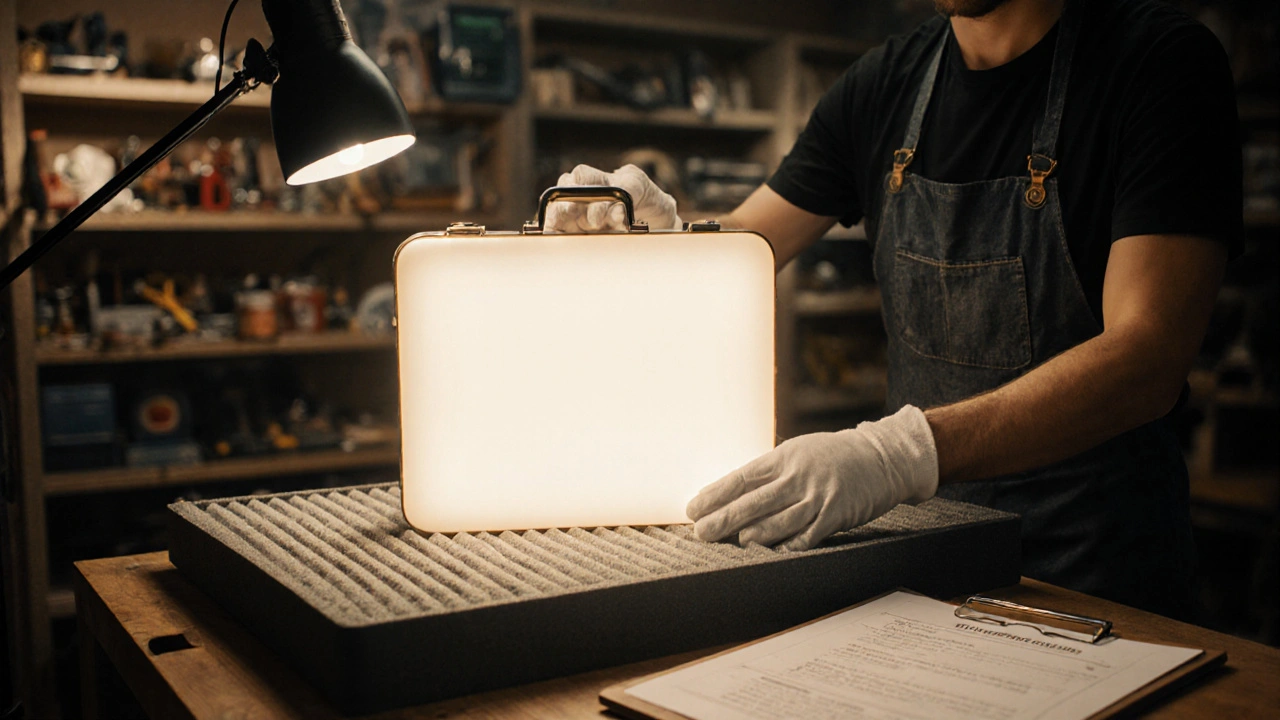
Hero Props: What They Are, Why They Matter in Film
When you think of a movie’s most unforgettable moment, it’s rarely just the actor or the dialogue—it’s often the hero prop, a key physical object central to a character’s identity or the plot’s turning point. Also known as star prop, it’s the thing the camera lingers on, the one that carries emotional weight, and the one that fans still want to own. Think of the lightsaber in Star Wars, the briefcase in Pulp Fiction, or the One Ring in The Lord of the Rings. These aren’t just set dressing. They’re characters in their own right.
Hero props don’t just appear on set—they’re designed, built, tested, and sometimes even modified during filming. A good prop design, the process of creating physical objects that serve narrative and emotional purposes in film starts with the script. What does the character need to hold? What does the scene demand? What will make the audience remember it years later? The production design, the overall visual concept of a film, including sets, costumes, and props team works with directors and actors to make sure every prop feels real, functional, and emotionally resonant. A fake sword might look cool, but if it doesn’t feel heavy enough when swung, the scene falls flat. That’s why many hero props are built with real materials, weighted correctly, and sometimes even modified to respond to light or movement.
Behind every hero prop is a team of artisans—sculptors, welders, painters, and fabricators—who turn sketches into tangible objects. Some props are made from scratch. Others are vintage items bought, restored, and repurposed. The mask in Halloween wasn’t just a store-bought mask—it was a William Shatner mask painted white and modified. The attention to detail turns something ordinary into something iconic. And when a hero prop becomes part of pop culture, it doesn’t just stay on screen—it goes to auctions, museums, and fan collections. That’s the power of a well-designed object in film.
Hero props also reveal how much of filmmaking is about subtlety. A character’s hesitation before picking up a letter, the way they cradle a broken watch, the way their fingers trace a scar on a knife—these moments live because the prop feels real. It’s not about budget. It’s about intention. A cheap toy can become a hero prop if the story demands it. A million-dollar artifact can feel hollow if it doesn’t serve the character.
Below, you’ll find real-world insights from filmmakers and designers who’ve worked with these objects. Whether it’s how a prop got made, why it mattered to the story, or how it influenced a scene’s entire tone—you’ll see how something you might overlook is often the heartbeat of a film.