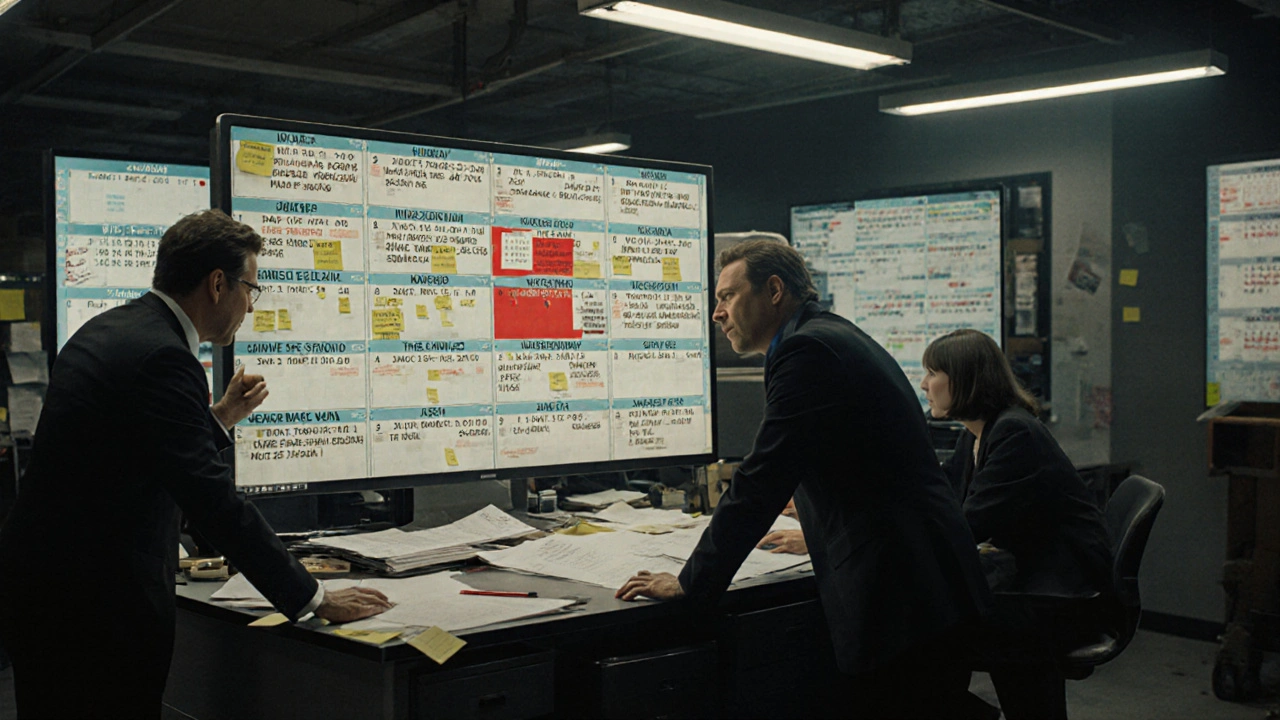
Filming Schedule: How Production Timelines Shape Movies and Budgets
When you think about how a movie gets made, you might picture actors on set or directors calling action—but the real engine behind every film is the filming schedule, a detailed plan that maps out every day of shooting, location, cast availability, and crew rotations. Also known as a production timeline, it determines whether a film stays on budget, gets finished at all, or collapses under pressure. This isn’t just paperwork. A bad schedule can kill a movie. A smart one can turn a $50,000 indie project into a festival hit.
The film production, the entire process of making a movie from pre-production to post lives and dies by this schedule. Studios stack holiday releases to chase box office gold, but even they can’t shoot faster than the calendar allows. Independent filmmakers? They’re fighting harder. When funding runs out mid-shoot, as seen in real cases like Independent Film Completion Strategies When Money Runs Out Mid-Shoot, the filming schedule becomes a survival tool. Crews work nights. Locations are swapped last-minute. Scenes are reordered to match weather, actor availability, or even when the rental camera becomes free again. It’s not glamorous—but it’s how films get finished.
And it’s not just about days. A indie film budget, the financial plan that funds every aspect of production, often tied directly to shoot days is built around how many days you can afford. Each extra day means more meals, more fuel, more overtime pay—or no pay at all if the crew is working on deferrals and back-end points. That’s why some shoots last 12 days instead of 20. Why horror films shoot at night to save on lighting costs. Why Nollywood films shoot in neighborhoods where everyone knows the crew and lends gear for free. The filming schedule isn’t just a list of dates—it’s a financial contract with reality.
Big studios use data to plan release windows, but even they can’t control everything. A storm delays a shoot in Vancouver. An actor gets sick. A permit falls through. That’s when the schedule bends, not breaks. The best producers don’t just follow a plan—they build in buffers, know which scenes can be moved, and have backup locations ready. And when it all comes together? That’s when you see the results: Oscar-winning indies like Everything Everywhere All at Once, or a surprise festival film that becomes a cult classic because someone managed to squeeze a whole movie into 17 days on a shoestring.
What you’ll find below isn’t just theory. It’s the real-world breakdowns of how filming schedules actually work—from how motion capture shoots demand precision timing, to how streaming films get made with compressed schedules to meet platform deadlines. Whether you’re a filmmaker, a crew member, or just a movie lover who wants to know why your favorite film took three years to make, this collection shows you the invisible structure behind every frame.