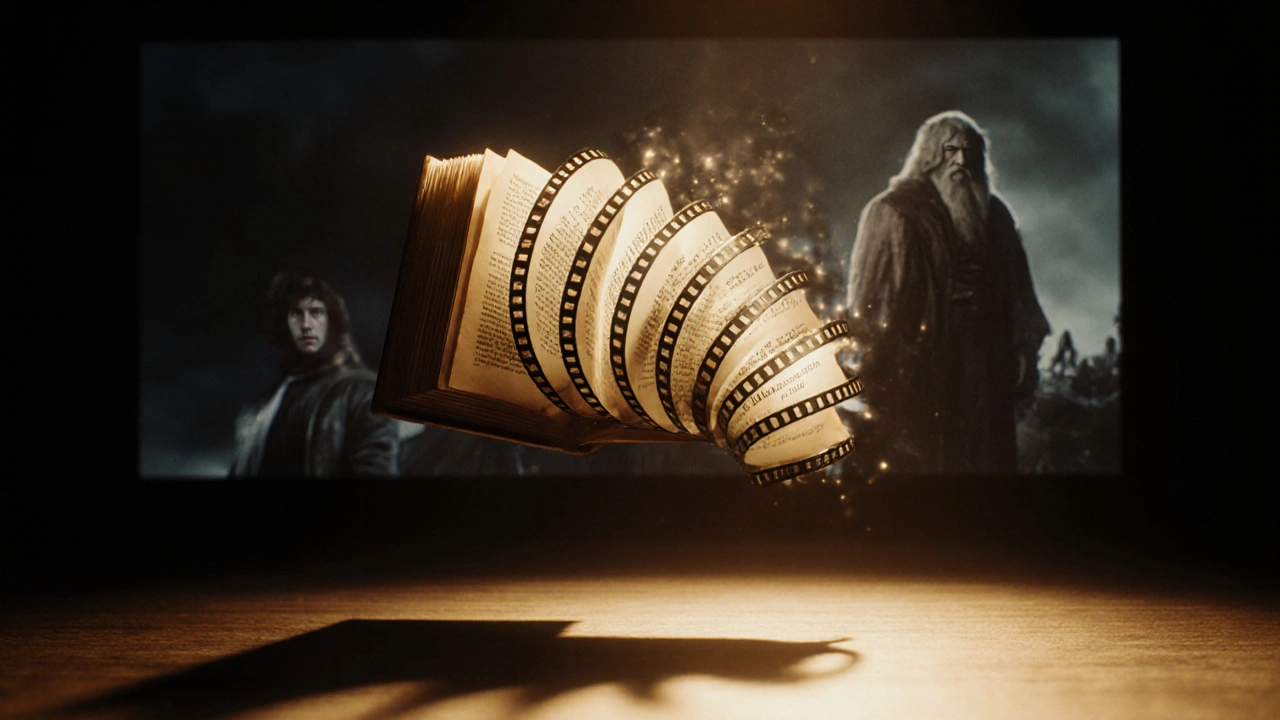
Film Adaptation Process: How Books, Comics, and Stories Become Movies
When a story moves from page to screen, it goes through the film adaptation process, the series of creative, financial, and logistical steps that transform a book, comic, or original narrative into a filmed motion picture. Also known as book to film adaptation, it’s not just about copying lines—it’s about rebuilding a world with cameras, actors, and sound. Most adaptations fail because they treat the source material like a blueprint instead of a living idea. The best ones capture the soul of the original, not just the plot.
What makes this process work? It starts with literary adaptations, the practice of turning novels, short stories, or plays into films. Think Harry Potter or The Lord of the Rings—they didn’t just translate pages into scenes; they rebuilt emotional arcs, trimmed subplots, and restructured pacing for a two-hour experience. Then there’s comic adaptation, the challenge of translating static panels into moving sequences with sound, camera motion, and rhythm. Look at Scott Pilgrim or Watchmen: they didn’t just animate panels—they turned visual language into cinematic grammar. And at the heart of every great adaptation? casting literary characters, the art of finding actors who don’t just look like the character but embody their inner voice, flaws, and contradictions. Get that wrong, and no amount of special effects will save it.
The film adaptation process isn’t just about creativity—it’s about compromise. Budgets shrink, studios demand changes, audiences have expectations. Some adaptations succeed because they respect the source but aren’t slaves to it. Others collapse under the weight of fan service or poor pacing. The ones you remember? They made you feel the same way the book did—even if the details changed.
What follows is a collection of real-world insights from filmmakers, producers, and critics who’ve lived through this process. You’ll find breakdowns of what works in casting iconic characters, how indie films navigate adaptation without studio backing, and why some stories translate perfectly to screen while others fall flat. No fluff. No theory without proof. Just what actually happens when a story leaves the page and steps into the light of a projector.