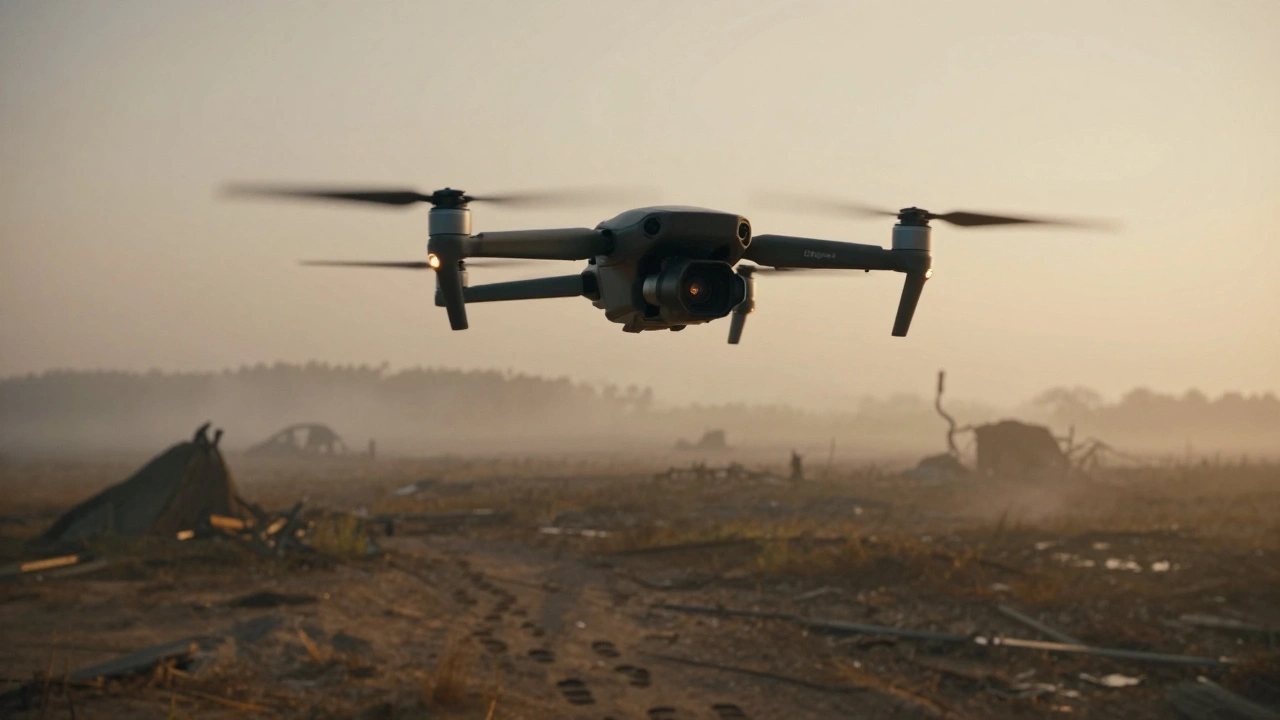
Drone Filmmaking: How Aerial Shots Are Changing Independent Cinema
When you think of drone filmmaking, the use of unmanned aerial vehicles to capture moving images for films. Also known as aerial cinematography, it has become one of the most accessible tools for indie filmmakers to create cinematic scale on a shoestring budget. Just five years ago, getting a sweeping overhead shot meant renting a helicopter, hiring a pilot, and spending thousands. Now, a $1,500 drone with a stabilized 4K camera does the same job in under an hour. This shift hasn’t just lowered costs—it’s changed how stories are told. Directors no longer need to cut away from emotional scenes just because they can’t afford a crane. They can float above a character walking through a forest, circle a tense standoff in an empty street, or glide through a crowded market like a silent observer. The camera isn’t just recording the action anymore—it’s becoming part of the emotion.
Drone filmmaking doesn’t exist in a vacuum. It works hand-in-hand with aerial cinematography, the art of shooting film from elevated perspectives to enhance mood and spatial awareness. But it also depends on drone cameras, specialized imaging systems built into drones for smooth, stable, high-resolution footage. These aren’t just toy gadgets—they’re precision tools. The best filmmakers treat them like lenses: they choose gimbal settings, flight paths, and lighting conditions the same way they’d pick a 50mm or 24mm prime. And it’s not just about pretty shots. Drones solve real problems: they capture wide establishing shots for low-budget films that would otherwise be impossible, they replace expensive rigging on tight schedules, and they let crews shoot in locations where traditional gear can’t go—steep cliffs, narrow alleys, abandoned buildings. Even big studios now use drones for second-unit work, but for indie filmmakers, they’re the difference between a film that looks professional and one that looks like it was made in a garage.
What you’ll find in this collection isn’t just a list of drone models or flight tips. It’s a practical look at how drone filmmaking fits into the real world of production. You’ll see how filmmakers use drones to solve budget problems, how they avoid legal pitfalls, and how they integrate aerial shots into storytelling without making them feel like flashy distractions. There are posts on how to plan drone shots around weather, how to sync drone footage with handheld scenes, and even how one team finished a feature film after their main camera broke—by switching entirely to drone-based coverage. These aren’t theory pieces. They’re lessons from people who’ve been there, with gear in hand, chasing light before sunset, hoping the battery lasts long enough to get the take.