Digital Film Environments: How Virtual Sets and VFX Shape Modern Cinema
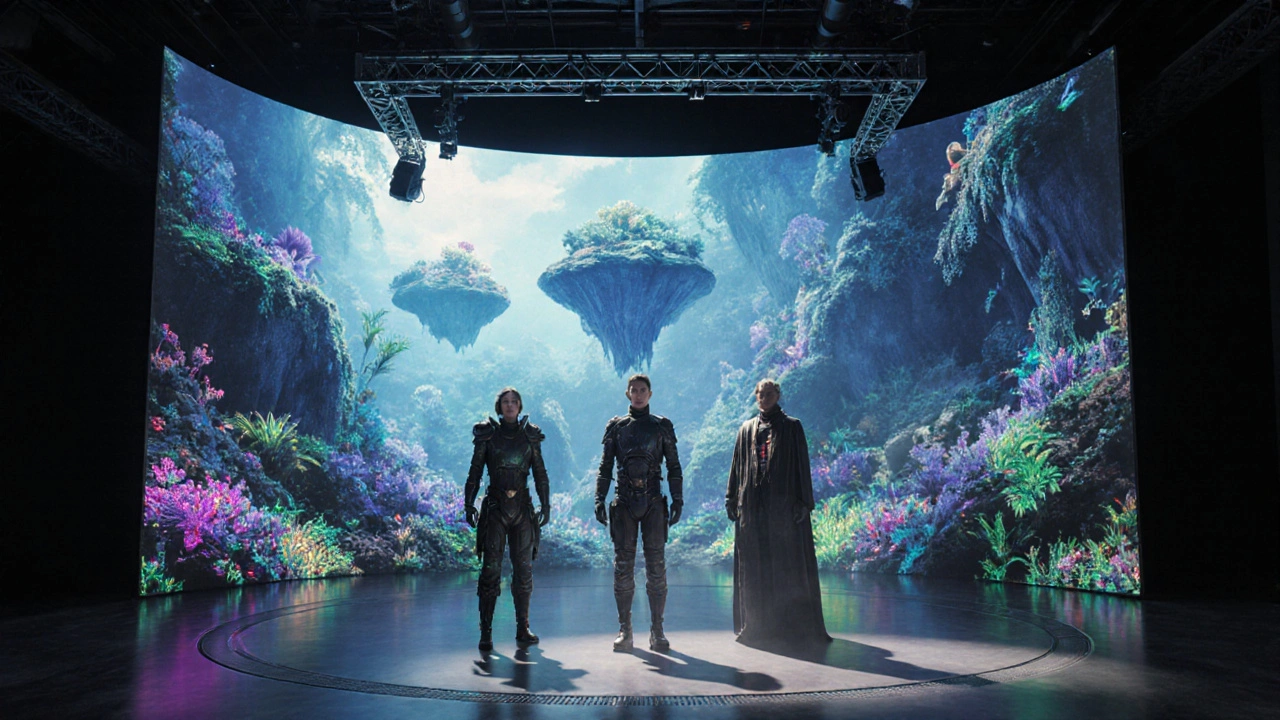
When filmmakers talk about digital film environments, computer-generated worlds that replace or enhance physical sets during filming. Also known as virtual production, it's not just green screens anymore—it's real-time rendering, LED walls, and motion capture working together to build entire scenes on set. This isn’t science fiction anymore. It’s how movies like Avatar, The Mandalorian, and even low-budget indie films are shot today.
Motion capture, the tech that turns actors’ movements into digital characters is a core part of digital film environments. It’s not just for CGI monsters—it’s used to make digital doubles for stunts, recreate aging actors, or even bring deceased performers back to life. And it doesn’t need a $200 million budget anymore. Tools like Blender and open-source motion tracking let indie filmmakers do it on a laptop. Virtual production, using LED volumes and game engines like Unreal Engine to display live backgrounds during filming cuts post-production time by letting directors see the final look on set. No more guessing what the sky will look like in post. You see it right then, with real lighting and reflections.
These tools change everything—from how actors perform to how crews work. A cinematographer now has to understand lighting for both real and virtual elements. A director might rehearse a scene in a virtual world before stepping onto the physical set. Even sound design adapts—because if a character walks through a digital forest, the leaves need to rustle in sync with the environment. Digital sets, fully rendered environments that replace physical locations mean you can shoot a desert scene in a warehouse in Toronto, or a medieval castle in a studio in Budapest, without ever leaving the lot. That’s why production hubs in Georgia, Hungary, and Thailand are booming—they’re not just cheaper, they’re built for this kind of filmmaking.
It’s not about replacing reality—it’s about expanding what’s possible. A filmmaker can now create a world that would be too dangerous, too expensive, or too impossible to build with wood and paint. And audiences don’t even notice. They just feel it. That’s the magic. The posts below show you how this works in practice—from the final pixel checks that catch a glitch in a digital sky, to how open-source tools are letting small teams build Hollywood-grade environments for pennies. You’ll see how digital film environments aren’t just a trend—they’re becoming the new normal.