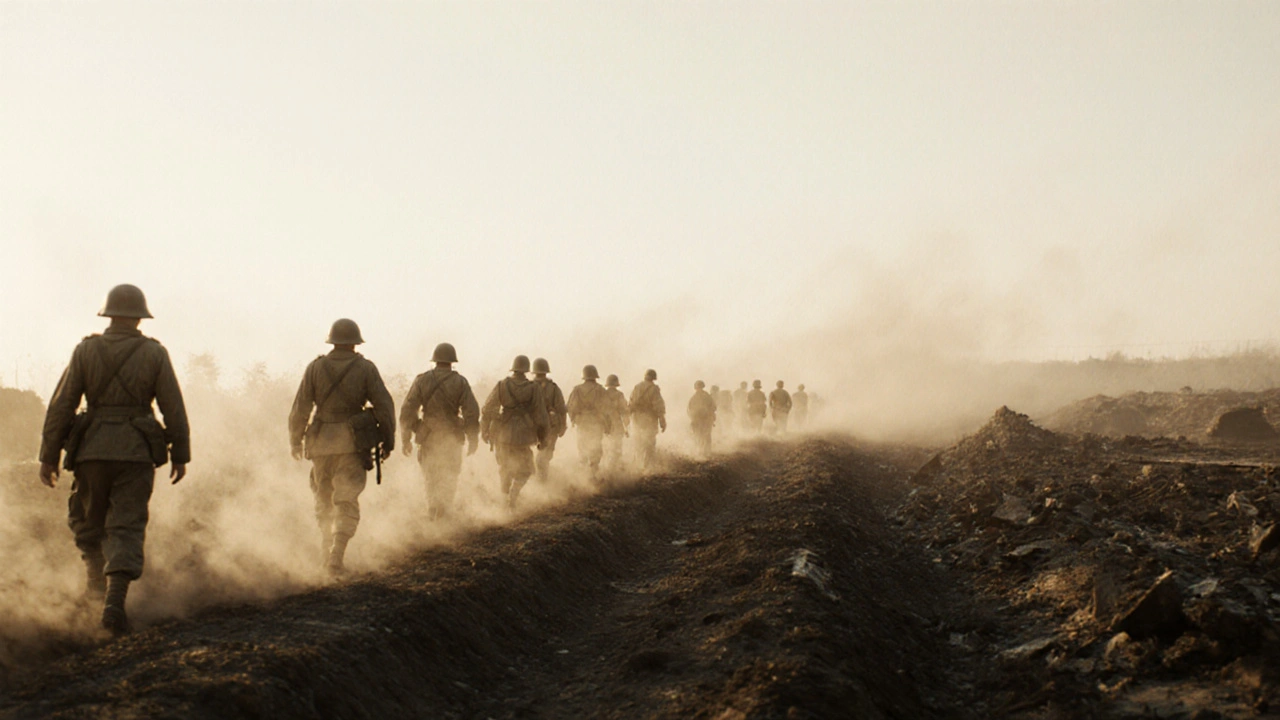
Cinematic Expression: How Film Tells Stories Beyond Words
When we talk about cinematic expression, the way films communicate emotion, meaning, and narrative through visual and auditory elements rather than just dialogue. Also known as visual storytelling, it’s what makes a silent stare more powerful than a monologue, or a slow zoom more haunting than a line of exposition. It’s not about what characters say—it’s about how the frame holds their silence, how the light falls on their face, how the music swells just before the crash. This is the language of film, and it’s been shaping how we feel long before subtitles appeared.
At its core, cinematic expression relies on the partnership between director and cinematographer, the artist who translates vision into light and movement through camera choices, lens selection, and composition. This isn’t just technical—it’s emotional. Think of how the shaky handheld shots in a war scene make you feel the chaos, or how a steady wide shot in a Western tells you how small a person is against the land. You don’t need dialogue to understand that. And when you pair that with film language—the unspoken rules of editing, pacing, sound design, and color—you start to see why some scenes stick with you for years. A single cut from a child’s toy to a bloodstain can carry more weight than ten pages of script. That’s cinematic expression in action.
It’s not just for art films. Even big-budget blockbusters use these tools to pull you in. The way the camera glides through the hallways in Hereditary isn’t just style—it’s dread made visible. The muted tones in The Grand Budapest Hotel aren’t just pretty—they tell you this world is carefully controlled, and about to break. And in documentaries, like those featured in our collection, cinematic expression turns real lives into unforgettable experiences without ever needing to explain them. You don’t need a narrator to feel the weight of a climate refugee’s silence when the camera lingers just a second too long.
What you’ll find in these posts isn’t theory—it’s practice. From how directors and cinematographers build trust on set to how low-budget films use lighting and framing to create depth without sets, you’ll see real examples of cinematic expression in action. You’ll learn how animators make lips move to match emotion, how virtual production changes the way light behaves on screen, and why some films make you feel something long after the credits roll—not because of what happened, but because of how it was shown. This isn’t about fancy gear or expensive cameras. It’s about intention. Every frame, every cut, every pause is a choice. And those choices? They’re what make cinema more than entertainment. They make it matter.