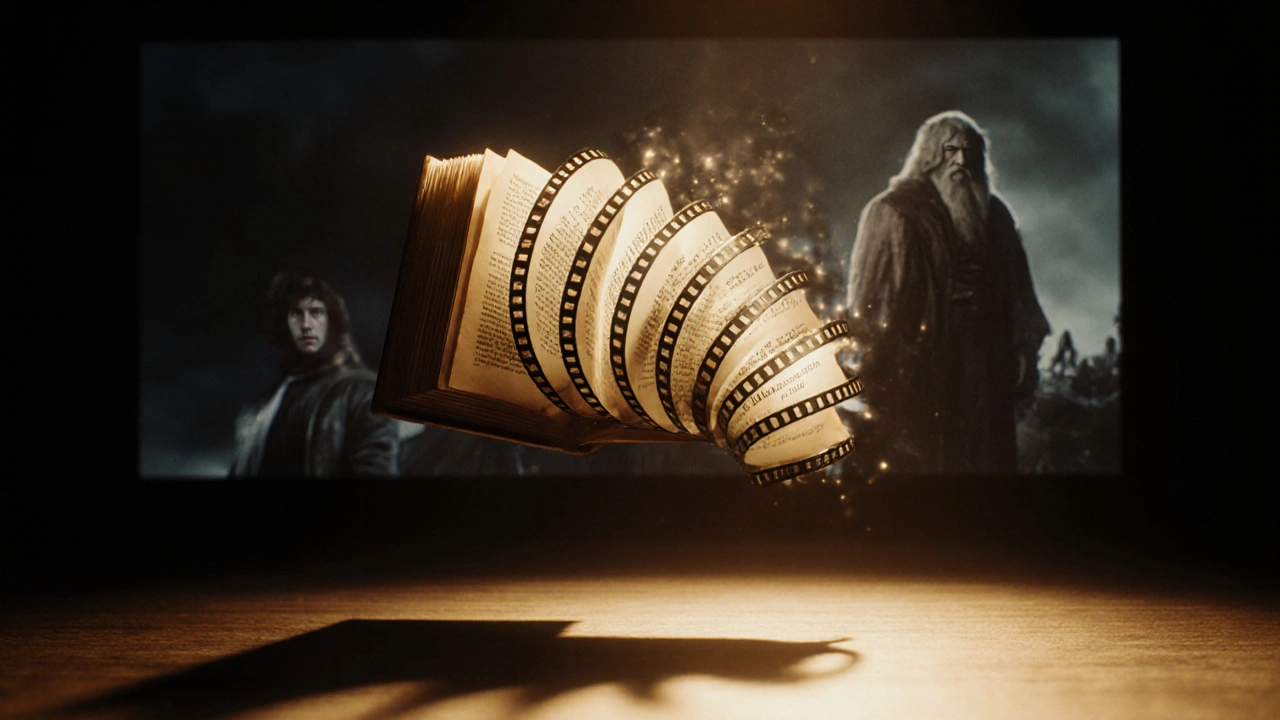
Book Adaptations: How Novels Become Blockbusters and Why Most Fail
When a book adaptation, a film or TV series based on a published novel. Also known as novel-based films, it brings written stories to life through visuals, sound, and performance. works, it feels inevitable—like the characters walked off the page and into the theater. But when it fails, you can’t help but wonder: why did they change that? Why did they cut the best part? The truth is, turning a book into a movie isn’t about copying pages. It’s about capturing the soul of the story in a language that cinema understands.
Successful literary adaptations, film projects derived from novels, short stories, or other written works don’t just rely on fan service. They understand pacing, tone, and emotional core. Take film franchises, long-running series of films built around a shared universe, characters, or source material like Harry Potter or The Lord of the Rings. They didn’t win because they were faithful to every chapter. They won because they knew what to leave out—and what to amplify. The quiet moments between characters, the weight of silence, the way a glance carries more than dialogue—that’s what translates. On the other hand, adaptations that try to fit every subplot, every side character, every paragraph often collapse under their own weight. They forget: movies are not books with pictures.
Casting is another minefield. casting literary characters, the process of selecting actors to portray well-known figures from novels isn’t about finding someone who looks like the description. It’s about finding someone who embodies the character’s heartbeat. A fan might picture a character with blue eyes and messy hair, but the actor who nails the voice, the hesitation, the unspoken pain? That’s the one that sticks. Studios often miss this. They cast for looks, not truth. And audiences notice. The difference between a good adaptation and a great one is often just one casting decision.
What’s missing from most adaptations isn’t budget or effects—it’s respect for the source. Not blind loyalty, but deep understanding. A book gives you access to thoughts, memories, inner monologues. A film has to show those things through action, lighting, music, silence. The best adaptations don’t just tell the story—they re-imagine it for a new medium. That’s why some novels never make good movies. And why others become timeless.
Below, you’ll find real-world breakdowns of what works, what doesn’t, and how the industry keeps getting it right—or wrong. From how Harry Potter built a global empire to why some beloved books vanish after one film, these posts give you the inside track. No fluff. Just what matters when a book meets the screen.