Anime Production: How Animated Films Are Made Behind the Scenes
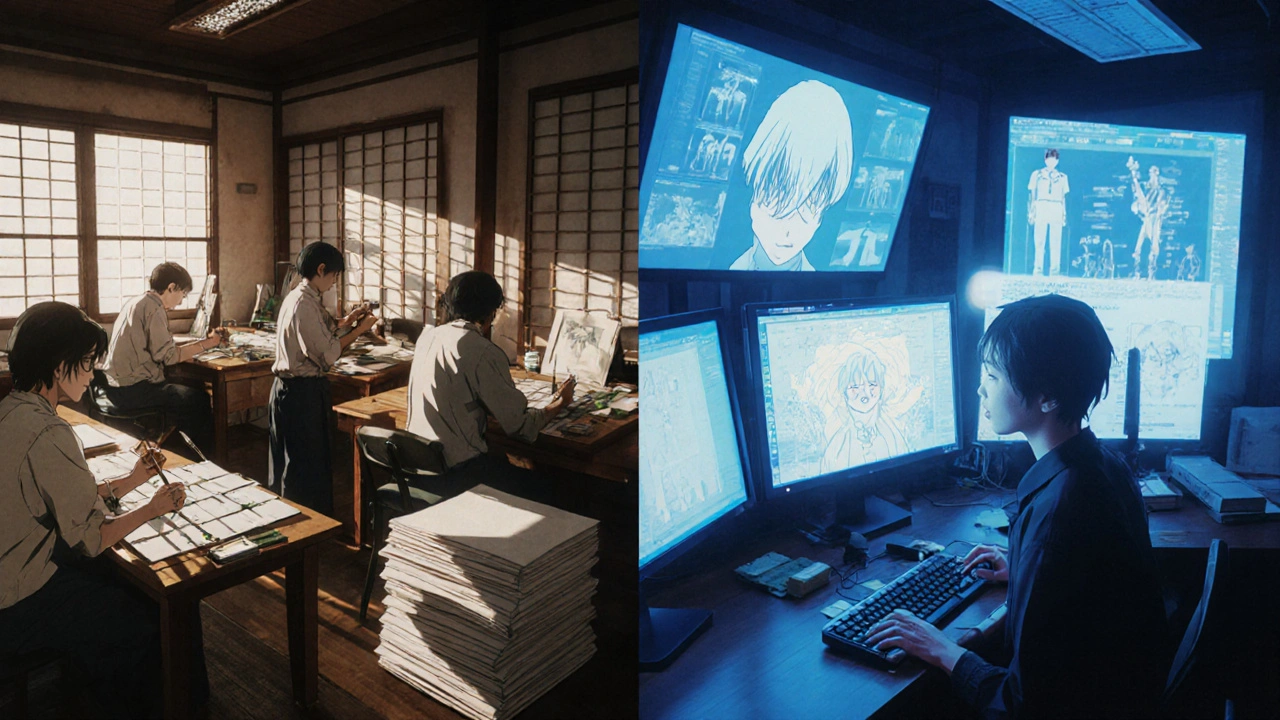
When you watch an anime, you’re seeing the result of anime production, the end-to-end process of creating animated series and films, often involving hundreds of artists, technicians, and writers working across multiple stages. Also known as Japanese animation, it’s a highly specialized craft that blends traditional hand-drawn art with digital tools to build worlds that feel alive—even when they’re made of ink and pixels. Unlike Western animation, which often relies on limited motion and reusable assets, anime production thrives on detail: every blink, every ripple of fabric, every shift in light is carefully planned. This isn’t just about drawing. It’s about timing, emotion, and consistency across dozens of episodes—or even hundreds of frames in a single movie.
Behind every scene is a chain of roles that most viewers never think about. The animation studio, a production company that handles the actual creation of animated frames, often subcontracting work across teams in different countries is the engine. Studios like Studio Ghibli, Trigger, or MAPPA don’t just hire animators—they build systems. Storyboards become keyframes, which turn into in-between drawings, then are cleaned up, colored, and composited. Sound design and voice acting animation, the synchronized matching of character lip movements to recorded dialogue to create believable speech happen in parallel. A single 22-minute episode can involve over 10,000 hand-drawn frames. And while some studios use digital tools like Toon Boom or Adobe Animate, many still rely on pencil and paper for the initial sketches—because the feel matters more than the speed.
What makes anime production unique isn’t just the art style. It’s the pressure. Many series are produced on tight deadlines with lean budgets, forcing teams to reuse backgrounds, recycle animations, or stretch limited resources. Yet, this constraint often leads to creativity: a single expressive close-up can carry more weight than a full-action sequence. You’ll see this in the posts below—how studios turn budget limits into artistic strengths, how directors collaborate with animators to make silence speak louder than dialogue, and how even minor characters get full emotional arcs because the production team refuses to cut corners.
From the first script draft to the final color grade, anime production is a dance between discipline and imagination. It’s not magic. It’s muscle memory, late nights, and a deep respect for the craft. And if you’ve ever wondered why some animated films stick with you long after the credits roll—this is why.
Below, you’ll find real-world breakdowns of how these processes work—from lip sync tricks that make characters feel human, to how streaming platforms now demand theatrical-quality animation at scale. No fluff. Just the tools, the trade secrets, and the stories behind the scenes.