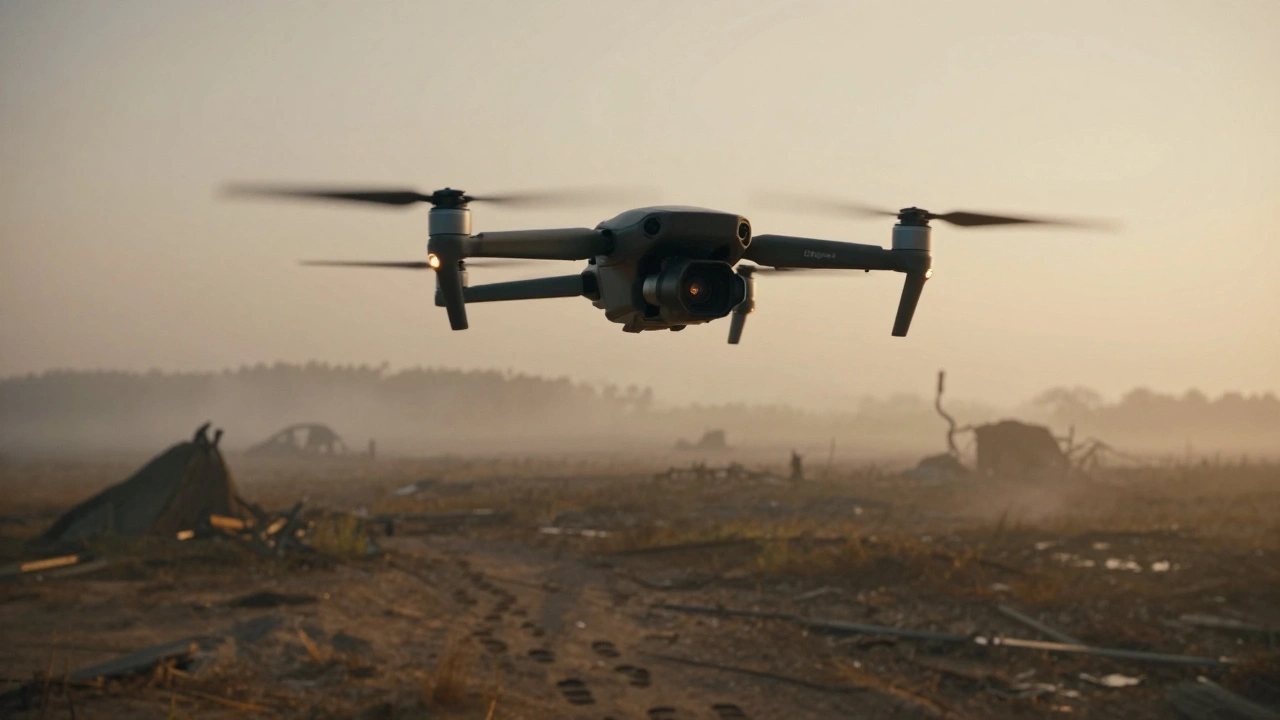
Aerial Shots in Film: How High-Altitude Camera Work Shapes Storytelling
When you see a film open with a sweeping view of a city rising from mist, or a lone character walking through a vast desert under a wide blue sky, that’s not just decoration—it’s aerial shots, camera perspectives captured from above the ground to frame scenes with scale, motion, or emotional weight. Also known as bird’s-eye views, they’re one of the most powerful tools in cinematography for controlling how audiences experience space and mood.
Aerial shots don’t just show where things are—they tell you how small or how huge they are in the world. Think of the opening of There Will Be Blood, where the camera glides over barren land before landing on a man digging for oil. That shot isn’t just setting the scene—it’s whispering about greed, isolation, and the cost of ambition. Modern filmmakers use drone cinematography to get those shots cheaply and safely, but the goal hasn’t changed: make the viewer feel the weight of the environment. Whether it’s a war scene from above, a chase through a forest, or a quiet moment on a cliff, the angle changes the story. You don’t need a helicopter anymore; a $500 drone can give you the same emotional punch—if you know how to use it.
But aerial shots aren’t just about gear. They’re about timing. A slow rise over a town before a disaster hits builds dread. A sudden drop from the sky into a crowded street creates chaos. Directors like Denis Villeneuve and Christopher Nolan don’t use them for spectacle—they use them to anchor emotion in physical space. That’s why you’ll find aerial shots in everything from indie dramas to blockbusters: they connect the character to the world around them in a way close-ups can’t. And when you pair them with camera movement—a glide, a tilt, a pull-back—you’re not just filming a scene, you’re conducting a feeling.
The posts below dig into how these shots are made, why they work, and which films used them best. You’ll find breakdowns of real scenes, the gear behind them, and how even low-budget films pull off stunning aerials without breaking the bank. No fluff. Just what matters: how to see, shoot, and understand the power of looking down from above.