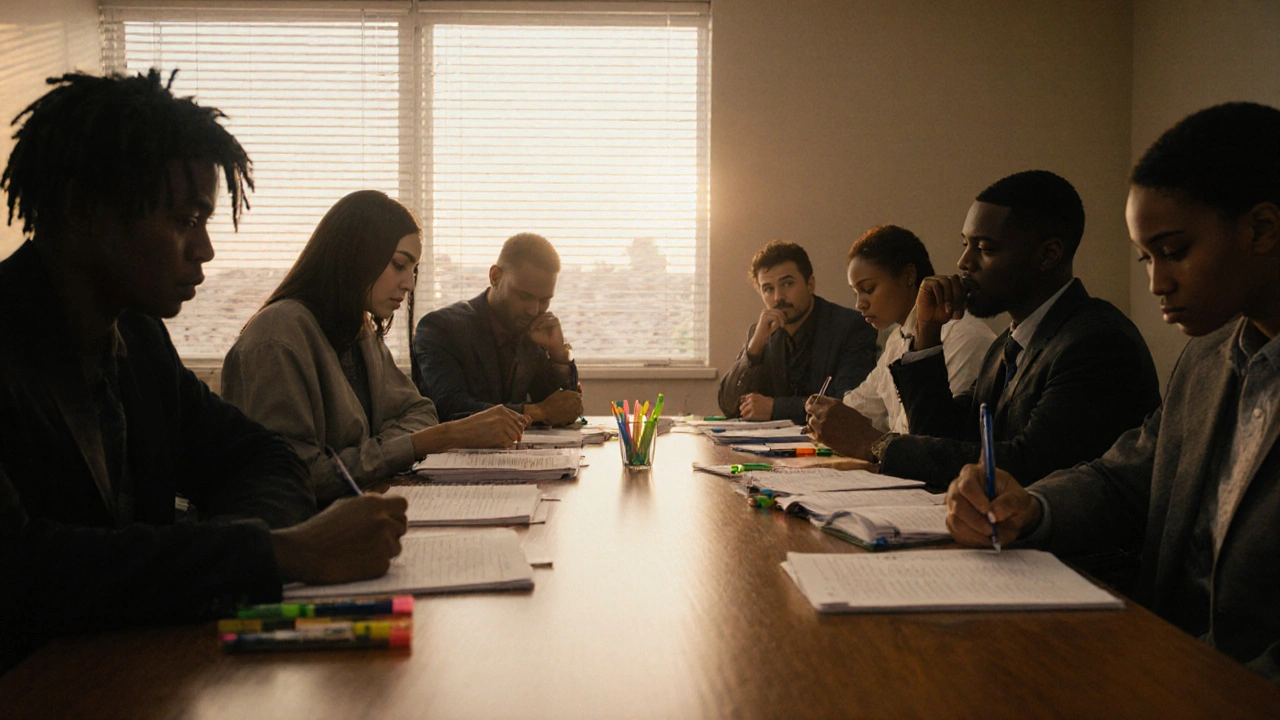
Actor Rehearsal: How Prep Shapes Performance on Set
When you see an actor deliver a line that cuts deep, it didn’t happen by accident. That moment was shaped by actor rehearsal, the intentional process where performers explore emotion, timing, and physicality before the camera rolls. Also known as blocking sessions or table reads, it’s the quiet engine behind every powerful scene.
Good actor rehearsal doesn’t mean repeating lines over and over. It’s about discovery. Directors like Paul Thomas Anderson and Greta Gerwig use rehearsal to build trust, not just memorization. Actors test how a pause lands, how a glance shifts meaning, how a stumble feels real. This is where performance notes come alive—not as commands, but as questions. "What if you didn’t move?" "What if you were angry but smiling?" These aren’t just directions—they’re invitations to find something raw. And when the camera rolls, that truth sticks because it was built, not guessed.
Rehearsal also ties directly to filming schedule and actor availability. On big franchises, actors might only have a few days to prep before shooting. That’s why some rehearsals happen weeks in advance, sometimes even in hotel rooms. Indie films? They often rehearse for days in empty warehouses because there’s no time or money to waste on set. The best performances come from actors who’ve had space to breathe, to fail, to try again. That’s the power of rehearsal—it turns scripts into living moments.
What you’ll find in these posts isn’t theory. It’s real talk from sets where budgets were tight, schedules were wild, and the only thing that mattered was getting it right. From how directors give subtle cues that unlock a performance, to how actors adapt when rehearsal time vanishes, this collection shows what happens before the lights go on—and why it changes everything.