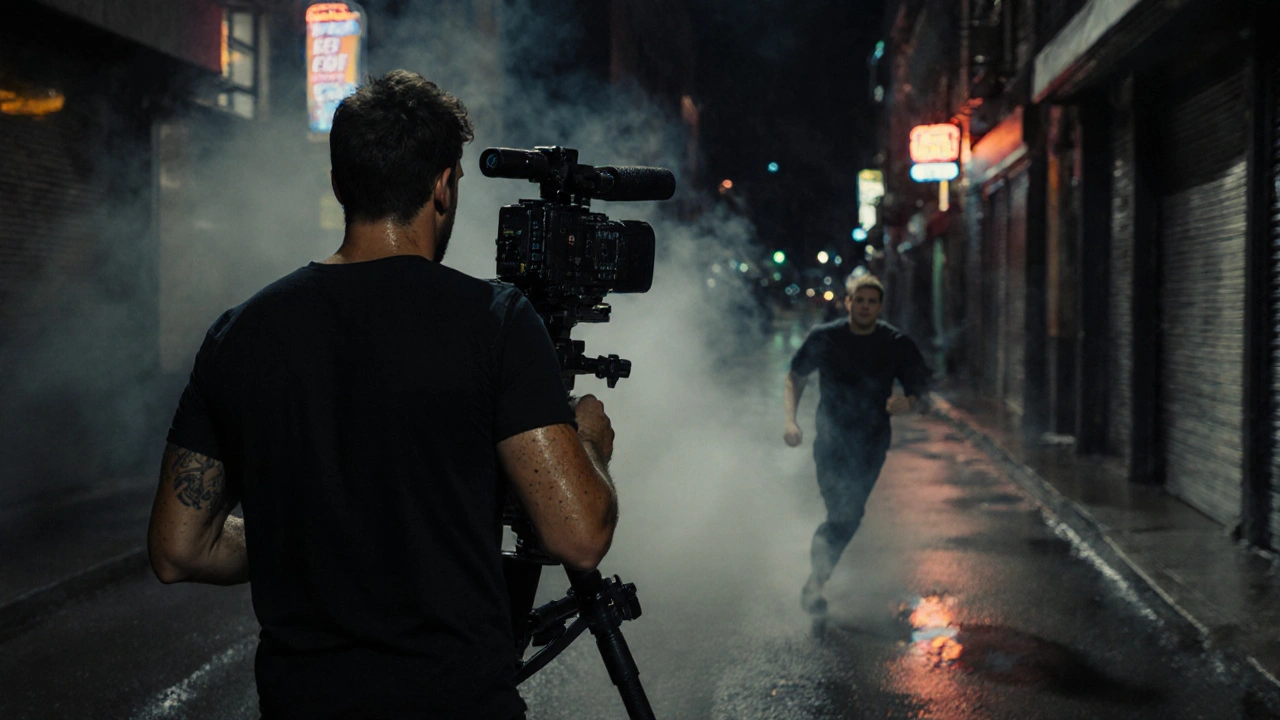
Action Sequences: How Big Moments Are Built in Modern Films
When you think of action sequences, high-octane, physically intense scenes designed to thrill audiences through movement, danger, and timing. Also known as stunt set pieces, they are the heartbeat of blockbusters—from Mad Max: Fury Road’s desert chase to John Wick’s hallway fights. These moments don’t happen by accident. They’re planned down to the frame, built on years of stunt training, and often rely on a mix of real stunts and digital enhancement. What makes an action sequence stick with you isn’t just how fast things move—it’s how clear the stakes feel, how grounded the physics seem, and how much you believe the person on screen is really in danger.
Behind every great action sequence, high-octane, physically intense scenes designed to thrill audiences through movement, danger, and timing. Also known as stunt set pieces, they are the heartbeat of blockbusters—from Mad Max: Fury Road’s desert chase to John Wick’s hallway fights. These moments don’t happen by accident. They’re planned down to the frame, built on years of stunt training, and often rely on a mix of real stunts and digital enhancement. What makes an action sequence stick with you isn’t just how fast things move—it’s how clear the stakes feel, how grounded the physics seem, and how much you believe the person on screen is really in danger.
Behind every great stunt choreography, the precise planning and execution of physical movements in film to create believable danger and excitement is a team of coordinators who treat every punch, fall, and crash like a dance. They map out camera angles, timing, and safety protocols long before the first shot. Meanwhile, practical effects, physical, in-camera techniques used to create real-world phenomena like explosions, debris, or vehicle crashes still drive the most memorable moments—even in CGI-heavy films. Think of the flipping truck in The Dark Knight or the real train crash in Die Hard. Audiences can feel the weight of those moments because they happened for real. And when visual effects, digital enhancements that extend or replace real-world elements to create impossible or dangerous scenes are used, they’re most effective when they hide in plain sight, supporting the stunt, not replacing it.
What you see on screen is often the result of months of rehearsal, broken bones avoided, and countless takes. The best action scenes make you forget the work behind them. They feel raw, immediate, and personal—even when they’re set in outer space or a collapsing city. That’s the goal: to make the impossible feel real. In this collection, you’ll find real stories from filmmakers who built these moments on tight budgets, under pressure, and without a safety net. You’ll learn how studios balance spectacle with storytelling, how stunt teams train for impossible moves, and why some of the most iconic sequences were almost never filmed at all.